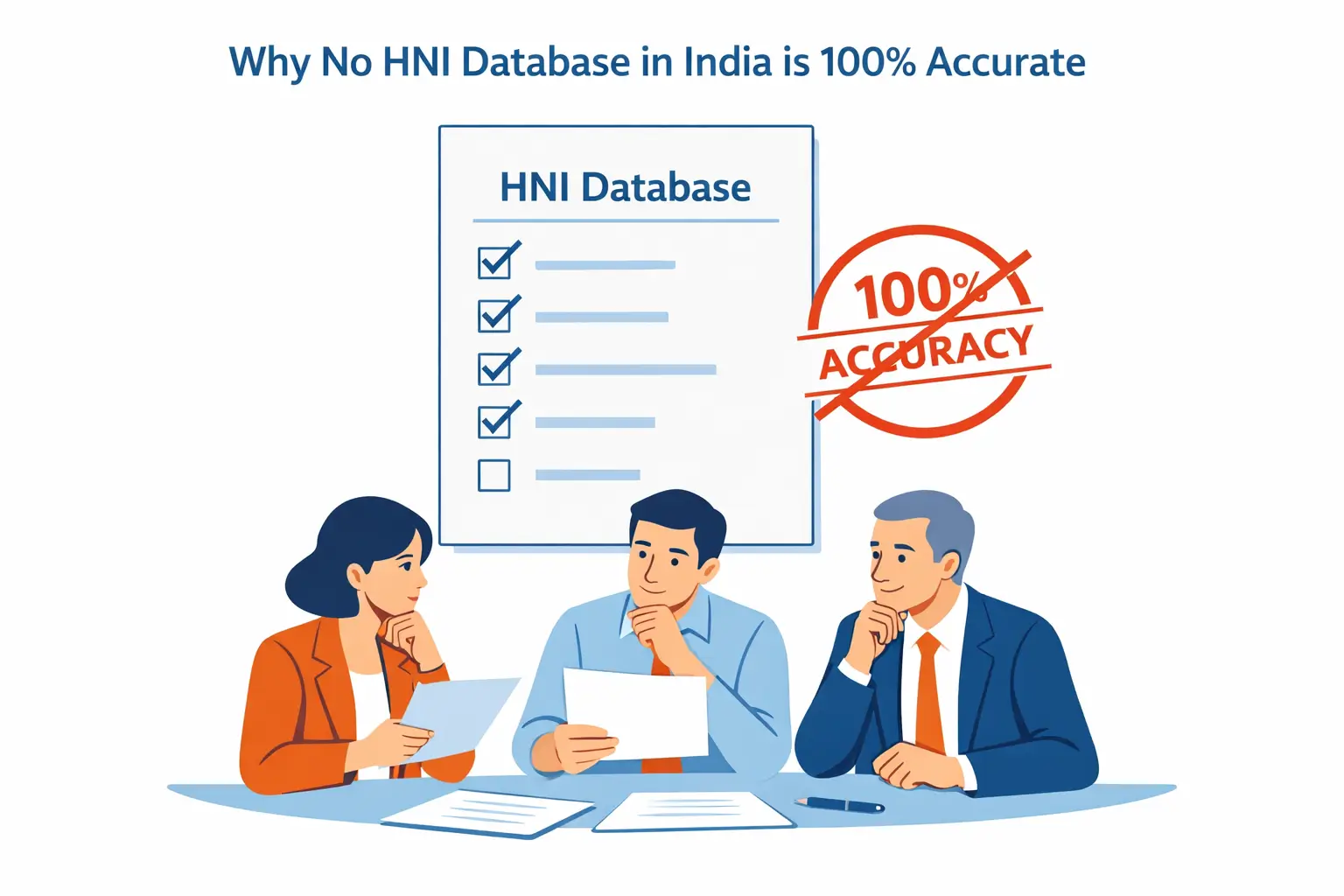
Why No HNI Database in India Is 100% Accurate

Introduction: A Truth Many Businesses Don’t Like to Hear
HNI database accuracy
Many businesses ask this question before buying HNI data:
“Is this HNI database 100% accurate?”
The honest answer is:
No HNI database in India can be 100% accurate.
This does not mean the data is bad.
It means expectations are often wrong.
This blog explains why perfect accuracy is impossible, what accuracy really means in HNI data, and how businesses should think about it in a practical way.
First, What Does “Accuracy” Really Mean?
HNI database accuracy
Many people think accuracy means:
-
Every phone number works
-
Every email is active
-
Every contact replies
This is not what accuracy means in business data.
In HNI databases, accuracy means:
-
Data is carefully collected
-
Information is cleaned and verified
-
Obvious errors are removed
-
Business context is correct
Even after this, some changes are unavoidable.
HNI Data Is Business Data, Not Live Personal Data
HNI database accuracy
This is the most important point.
HNI databases contain business-related information, not live personal records.
People change:
-
Phone numbers
-
Email addresses
-
Business roles
-
Investment focus
Because of this, perfect accuracy cannot exist.
Many businesses fail because they do not understand this difference, which is clearly explained in
why HNI outreach fails
High-Net-Worth Individuals Change Faster Than You Think
HNIs are not static.
They:
-
Buy and sell businesses
-
Shift investments
-
Delegate communication to teams
-
Change contact preferences
A database captures a moment in time, not a permanent truth.
This is why expecting permanent accuracy leads to frustration and poor decisions.
Multiple Sources Still Don’t Guarantee Perfection
Good HNI databases use:
-
Multiple data sources
-
Manual checks
-
Verification processes
Even then, real life changes faster than data updates.
That is why understanding data quality and compliance checks matters more than chasing 100% accuracy
Accuracy Drops When Businesses Use Data the Wrong Way
Another reality many ignore:
Accuracy feels “low” when usage is wrong.
For example:
-
Sending bulk messages
-
Expecting replies from everyone
-
Treating data like a lead list
These behaviours create disappointment and blame the data.
This pattern is part of the common mistakes businesses make with HNI data
City and Industry Changes Affect Accuracy
HNI data behaves differently across cities and industries.
For example:
-
Mumbai HNIs change business roles frequently
-
Startup-driven cities see faster movement
-
Traditional business hubs are more stable
That is why businesses study insights like wealth patterns in Mumbai
instead of assuming one rule fits all.
Why Honest Providers Never Promise 100% Accuracy
Any provider promising:
-
“100% verified data”
-
“Guaranteed working contacts”
is not being realistic.
Responsible providers focus on:
-
High accuracy, not perfect accuracy
-
Transparency, not exaggeration
-
Correct usage guidance
This responsible approach aligns with how HNI databases are built and used
What Businesses Should Expect Instead of 100% Accuracy
Smart expectations look like this:
-
Most data is usable
-
Some contacts may change
-
Patterns and insights matter more than replies
-
Planning value is higher than outreach value
This mindset reduces frustration and improves results.
Example: Real Estate Businesses
Real estate companies often ask about accuracy.
Successful developers do not expect every contact to respond.
They use HNI data to:
-
Understand buying capacity
-
Study ownership patterns
-
Plan premium projects
This use case is explained clearly in
real estate decision planning
The Biggest Mistake Businesses Make About Accuracy
The biggest mistake is believing:
“If accuracy is not 100%, the data is useless.”
This belief is wrong.
Even 70–80% accurate business data, when used correctly, is extremely valuable.
What fails is expectation, not the database.
That is why learning why HNI outreach fails early saves money and reputatioN
Key Takeaways
-
No HNI database can be 100% accurate
-
HNI data reflects a moment in time
-
Business data changes constantly
-
Usage affects perceived accuracy
-
Right expectations create value
FAQs
Is low accuracy a sign of bad HNI data?
No. Some level of change is normal.
Should businesses avoid HNI data because it’s not perfect?
No. They should avoid unrealistic expectations instead.
What matters more than accuracy?
Understanding, planning, and responsible usage.