
HNI vs UHNI Data in India: Differences That Impact Business Decisions

Introduction
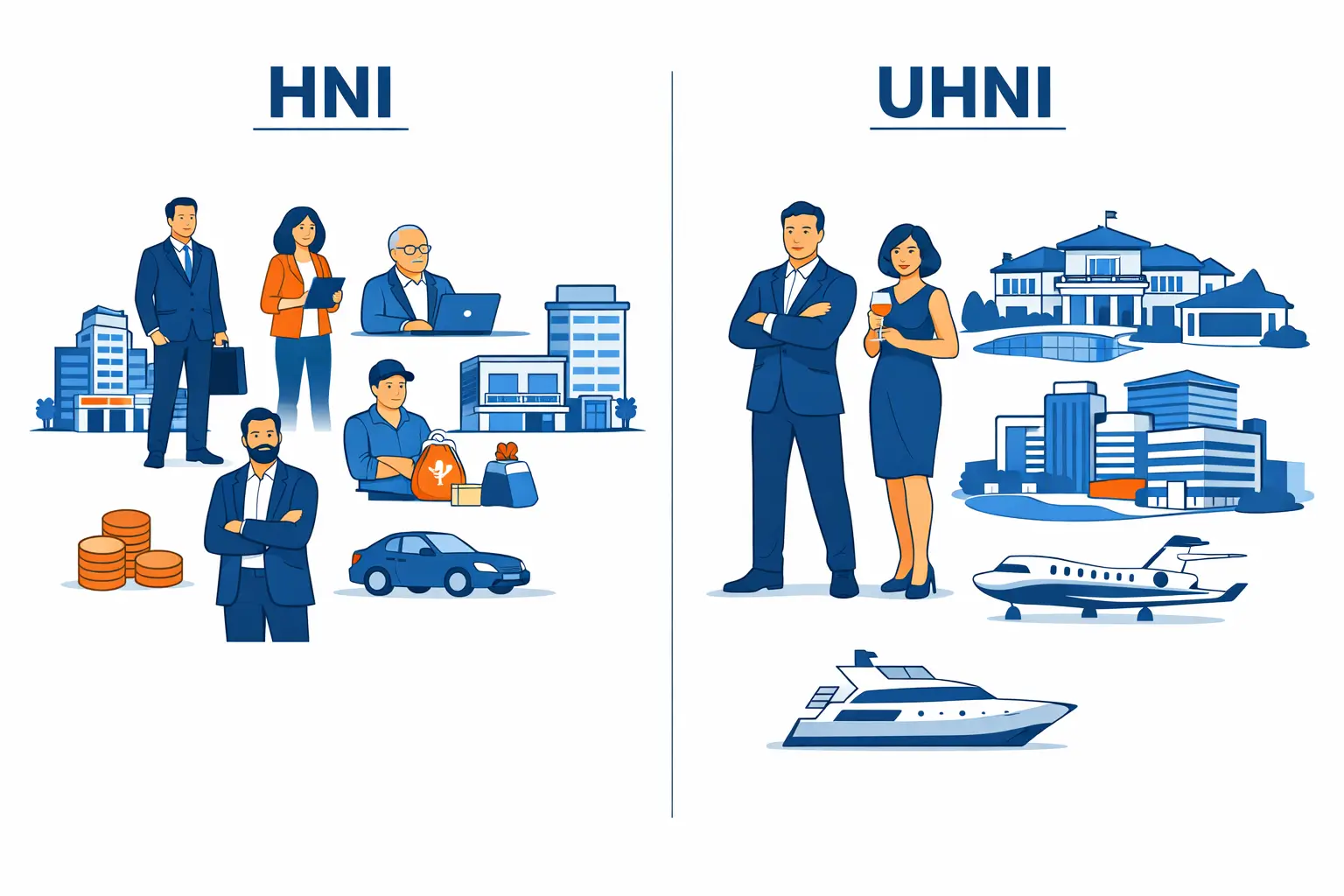
HNI vs UHNI data
In India, not all wealthy people are the same.
Some businesses fail because they treat all rich individuals as one group.
This is a serious mistake.
In reality, there is a big difference between HNI and UHNI individuals.
Understanding this difference helps businesses plan better and avoid costly errors.
This blog explains HNI vs UHNI data in simple terms and shows how these differences impact real business decisions in India.
What Is HNI Data?
HNI vs UHNI data
HNI stands for High Net Worth Individual.
In simple words, HNIs are people who:
-
Have high income or wealth
-
Own businesses or properties
-
Make important financial decisions
Most HNIs are:
-
Business owners
-
Promoters
-
Senior professionals
-
Active investors
HNI data helps businesses understand wealth distribution and decision-making power across cities and industries.
What Is UHNI Data?
HNI vs UHNI data
UHNI stands for Ultra High Net Worth Individual.
UHNIs are much fewer than HNIs but far more powerful financially.
They usually:
-
Own very large businesses
-
Control family wealth or group companies
-
Hold major investment portfolios
-
Influence big financial decisions
UHNI data is more sensitive, more limited, and more complex than HNI data.
The Core Difference Between HNI and UHNI Data
The difference is not just about money.
1. Volume vs Rarity
-
HNI data exists in larger numbers
-
UHNI data is extremely limited
This means UHNI datasets are smaller but more critical, while HNI datasets allow broader market understanding.
2. Decision-Making Power
HNIs often influence decisions.
UHNIs often control decisions.
Businesses that ignore this difference often repeat the same planning mistakes described in
why HNI outreach fails
3. Data Structure and Depth
HNI vs UHNI data
HNI data usually focuses on:
-
Business background
-
City and industry presence
-
General investment profile
UHNI data often requires:
-
Family wealth understanding
-
Group-level ownership mapping
-
Long-term asset tracking
This is why understanding how HNI databases are built and used matters before choosing datasets
How These Differences Impact Business Decisions
1. Market Entry Planning
Businesses entering a city first look at HNI data to understand:
-
Wealth spread
-
Industry concentration
-
Business opportunity size
This approach is common in studies like wealth patterns in Mumbai
UHNI data is used later, only when the opportunity justifies deeper focus.
2. Risk and Expectation Management
UHNI data does not mean faster success.
In fact, wrong expectations around UHNI targeting often cause bigger failures, which is why businesses must understand common mistakes businesses make with HNI data
3. Industry-Specific Use
Some industries rely more on HNI data, others on UHNI data.
For example:
-
Real estate developers often start with HNI data
-
Ultra-luxury projects may later evaluate UHNI profiles
This layered approach is clearly visible in real estate decision planning
Data Accuracy and Compliance Differences
UHNI data is harder to verify and more sensitive.
This is why businesses must clearly understand data quality and compliance checks before using any dataset
Expecting perfect UHNI data is unrealistic and often dangerous.
Which One Should a Business Use?
There is no “better” option.
There is only a correct use case.
Use HNI data when:
-
You need market understanding
-
You are mapping opportunities
-
You are planning city-wise expansion
Use UHNI data when:
-
You are dealing with very high-value decisions
-
Your offering matches ultra-premium needs
-
You are prepared for long decision cycles
Simple Comparison Table (In Words)
-
HNI data → broader, scalable, planning-focused
-
UHNI data → rare, sensitive, decision-critical
Using the wrong dataset at the wrong stage leads to failure.
Key Takeaways
-
HNI and UHNI are not the same
-
UHNI data is rarer and more complex
-
HNI data helps with broader planning
-
Business decisions depend on choosing the right dataset
-
Wrong expectations cause failure
FAQs
Is UHNI data better than HNI data?
No. It is different, not better.
Can UHNI data guarantee business success?
No. Data never guarantees outcomes.
Why do businesses struggle with UHNI data?
Because they underestimate complexity and overestimate speed.